
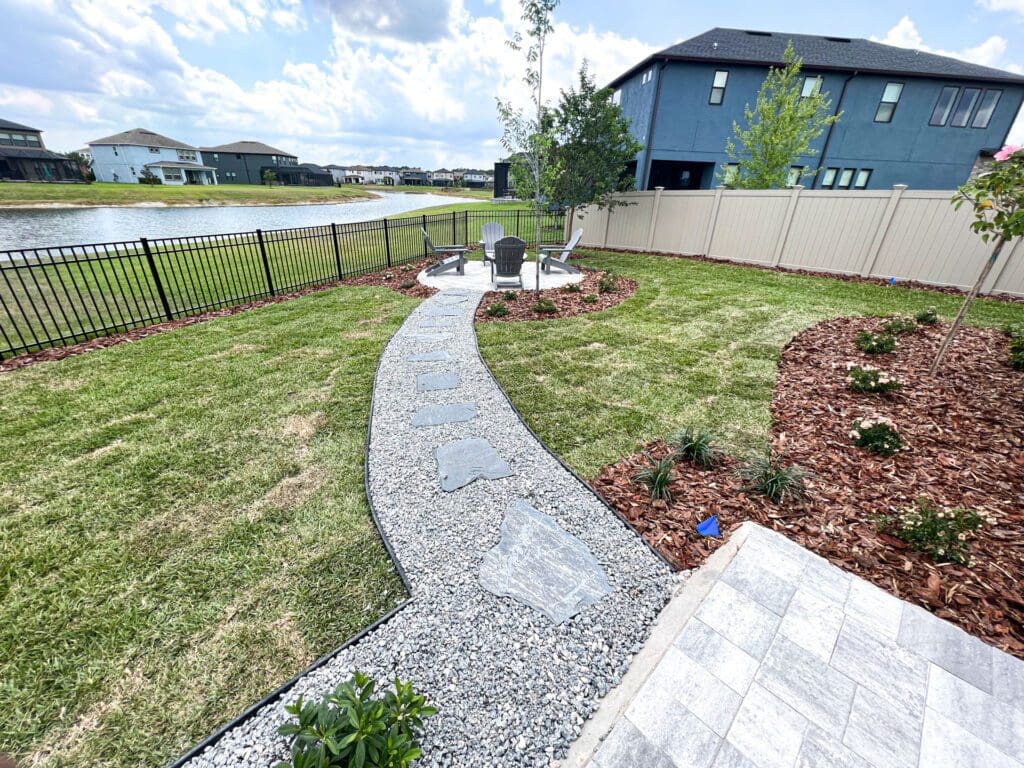
If you are planning a new outdoor living area, one of the first questions you may ask when researching is, “How long do paver patios last?” before they need significant repairs or replacement. A professionally installed paver patio can typically provide 25 to 50 years or more of useful service, depending on the paver material, foundation preparation, drainage, installation quality, and ongoing maintenance.
At Olvera Landscaping, we know that homeowners throughout Pasco County, Hillsborough County, Polk County, Brandon, and Wesley Chapel can use this information to make a more informed long-term investment in their property. That’s why we compiled this guide to walk you through the most important factors to consider when looking for paver patios.
How Long Do Paver Patios Last With Professional Installation?
A properly constructed patio is more than a layer of attractive paving stones. Paver patio lifespan depends on the entire system, including the excavated area, compacted base, bedding layer, edge restraints, joints, drainage plan, and surface material.
When these components are installed correctly, individual pavers can remain functional for decades. In many situations, the visible pavers are not the first part of the patio to cause problems. Settlement, movement, uneven areas, and drainage problems are more likely to develop when the underlying base was improperly prepared.
That is why homeowners comparing contractors should look beyond the finished surface. Understanding common paver patio installation mistakes can help you see why installation quality matters as much as material selection.
Paver Patio Lifespan By Material
The type of paver you choose plays an important role in determining the expected life of a paver patio. Different materials offer different combinations of longevity, appearance, maintenance requirements, and initial investment.
- Concrete pavers typically provide about 20 to 50 years of service when installed on a stable base and properly maintained. Concrete pavers offer strong durability and design flexibility, which makes them a popular option for residential patios.
- Clay brick pavers can potentially last 50 to 100 years or longer. Their color tends to age well because the material itself provides the coloration rather than relying on surface treatment alone. Individual bricks may eventually chip or become damaged, but you can often replace affected units without rebuilding the entire patio.
- Natural stone is another exceptionally durable option when looking up “how long do paver patios last?” Natural stone pavers can last 50 to 100 years or more under suitable conditions. Performance varies by stone type, density, installation method, and exposure.
- Porcelain pavers can provide approximately 30 to 50 years or longer. Their low porosity helps resist staining and fading, although the material and installation costs can be higher than some conventional concrete options.
Life Expectancy Of Paver Patio Foundations
Homeowners naturally focus on the pavers they can see, but the foundation underneath them can be even more important. A properly compacted base helps prevent settlement, movement, and uneven surfaces as the patio ages.
The installation process generally requires removing unsuitable material and establishing a stable base appropriate for the site. Cutting corners at this stage may not show up right away, but problems can develop later as soil shifts or water affects the underlying layers.
Central Florida properties can present different soil and drainage conditions from one neighborhood to another. Professional evaluation is therefore crucial before determining base preparation. Homeowners can review additional paver patio installation guidance when researching “how long do paver patios last” before choosing a construction approach.
Why Drainage Affects Your Paver Patio Durability
Water management is a major factor in long-term paver patio durability. Plan a patio with sufficient slope and drainage so water moves away from areas where pooling could damage the base or surrounding landscape.
Repeated standing water may wash away joint material, contribute to settlement, encourage unwanted growth between joints, or expose weaknesses in poorly prepared areas. Design should address grading early, not as an afterthought.
This is particularly relevant during Central Florida’s periods of heavy rainfall. Properties that already experience standing water may require additional evaluation before patio construction. Professional drainage solutions can sometimes be incorporated into a broader outdoor improvement plan to protect both the patio and surrounding landscape.
How Florida Conditions Affect Paver Patios
Homeowners in Pasco County, Hillsborough County, Polk County, Brandon, and Wesley Chapel deal with Florida-specific patio conditions, including substantial rainfall, strong sunlight, humidity, and properties with drainage or sandy-soil concerns, all crucial when understanding “how long do paver patios last in Florida”.
These conditions do not mean a paver patio will have a short lifespan. Instead, they reinforce the importance of site-specific preparation. A patio designed for your property should account for existing grade, runoff patterns, adjacent structures, landscaping, irrigation, and how you plan to use the outdoor space.
For Hillsborough County homeowners, reviewing professional paver patio installation tips can offer additional perspective on planning a durable outdoor surface for local conditions. Pasco County homeowners can also learn about common paver installation challenges.
Maintenance That Can Extend Paver Patio Lifespan
Even a well-built patio benefits from routine attention. Preventive maintenance helps preserve patio performance and lets homeowners catch small problems before they become bigger repairs.
- Keep the surface reasonably clean and monitor the joints, edges, and low areas.
- If joint sand begins disappearing, replenishing it can help maintain stability.
- Polymeric joint sand may need refreshing periodically depending on exposure, drainage, installation, traffic, and product performance.
- Concrete pavers may also benefit from periodic sealing when appropriate.
A common maintenance interval is around every 2 to 3 years, although actual timing should depend on the paver, sealer, weather exposure, and manufacturer recommendations. Sealing can help protect appearance and simplify maintenance, but it does not compensate for a poorly constructed foundation.
What Shortens The Life Expectancy Of Paver Patio Surfaces?
Several problems can reduce the useful life expectancy of paver patio installations. Inadequate compaction, poor drainage, unstable edges, incorrect grading, and neglected joints can all contribute to premature deterioration.
Watch for pavers that begin sinking, spreading at the perimeter, creating trip hazards, or forming areas where water consistently collects. These signs don’t automatically mean the entire patio needs replacement, but they do indicate you should evaluate the underlying cause.
One advantage of interlocking pavers is their repairability. You can often lift individual sections to correct the base before resetting the pavers. Localized repairs can preserve an otherwise sound patio, unlike some continuous surfaces, where visible repairs may be harder to integrate.
Are Pavers More Durable Than Poured Concrete?
Pavers and poured concrete behave differently because pavers create a modular surface rather than one continuous slab. This allows individual units and joints to accommodate some movement and makes localized repairs practical.
You can often replace or reset a cracked or settled paver without disturbing the entire patio. With poured concrete, cracking may affect a larger continuous area, and repairs can remain visible.
That repairability is one reason homeowners often evaluate pavers as a long-term outdoor-living investment. Before deciding between materials and googling “how long do paver patios last”, review the pros and cons of a paver patio to determine whether pavers match your budget, maintenance expectations, and design goals.
Choosing Pavers For Long-Term Value
The longest-lasting material is not automatically the best material for every property. The right paver should balance durability, design, budget, and maintenance.
Concrete pavers offer broad design flexibility and accessible options. Brick can provide exceptional longevity and a traditional aesthetic. Natural stone delivers distinctive character and potentially exceptional service life. Porcelain works well for homeowners prioritizing low porosity and a contemporary look.
The surrounding landscape should also influence your decision. Patio elevations, walkways, retaining features, irrigation, lighting, planting beds, and drainage can all affect how successfully the final outdoor space functions. Coordinating the patio with professional landscape design services can help create a more cohesive outdoor environment rather than treating the patio as an isolated feature.
Professional Paver Patio Installation In Central Florida
The answer to “how long do paver patios last” ultimately depends heavily on what happens before the first visible paver is placed. Base preparation, grading, drainage, and installation details determine long-term performance.
Olvera Landscaping Irrigation LLC provides landscaping, hardscaping, irrigation, drainage, and outdoor improvement services for residential properties. Homeowners throughout the greater Central Florida service area can explore our hardscape services and complete range of outdoor services when planning a new patio or broader property improvement.
A professional site evaluation can help identify grading concerns, drainage requirements, material options, layout considerations, and related landscape improvements before installation begins. Planning the complete system from the beginning can protect the value of your patio investment.
How To Get The Most From Your Paver Patio Investment
If your goal is a patio that remains attractive and functional for decades, focus first on construction quality rather than surface appearance alone. Choose materials appropriate for your priorities, insist on proper base preparation, address drainage early, and maintain joints and surfaces as conditions require. A durable patio begins with good installation decisions.
Homeowners in Pasco County, Hillsborough County, Polk County, Brandon, and Wesley Chapel can contact Olvera Landscaping’s team to discuss professional paver patio installation and complementary landscaping, drainage, irrigation, lighting, or retaining-wall solutions.
Follow us on social media to see our projects in real time. Connect with Olvera Landscaping Irrigation LLC on Facebook, follow our projects on Instagram, or watch our latest work on YouTube.
